


Qian's 61,245 bitcoin are worth £3.8bn. Her victims lost £2bn.
A London judge sent the Qian victims' claims to Chinese law. Chinese prosecutors put losses at RMB 20bn, about £2bn, leaving £1.8bn of UK-held bitcoin unclaimed.
By the numbers
£3.8bnthe 61,245 bitcoin the UK government holds from the Qian case
RMB 19.98bnwhat Chinese prosecutors say the scheme's 102,000 investors lost, about £2.0bn
RMB 6.1bnraised minus repaid, by the Tianjin court figures the London judgment quotes, about £0.6bn
£1.8bnof bitcoin left over after the larger loss figure is paid in full
46%how far bitcoin has to fall before the coins stop covering that loss
The 61,245 bitcoin the UK seized from Zhimin Qian are worth about £3.8 billion. The people she defrauded lost far less than that. China's own prosecutors put the losses at 19.98 billion yuan, about £2.0 billion. So even if every victim gets those losses back in full, roughly £1.8 billion of bitcoin has no victim's name on it.
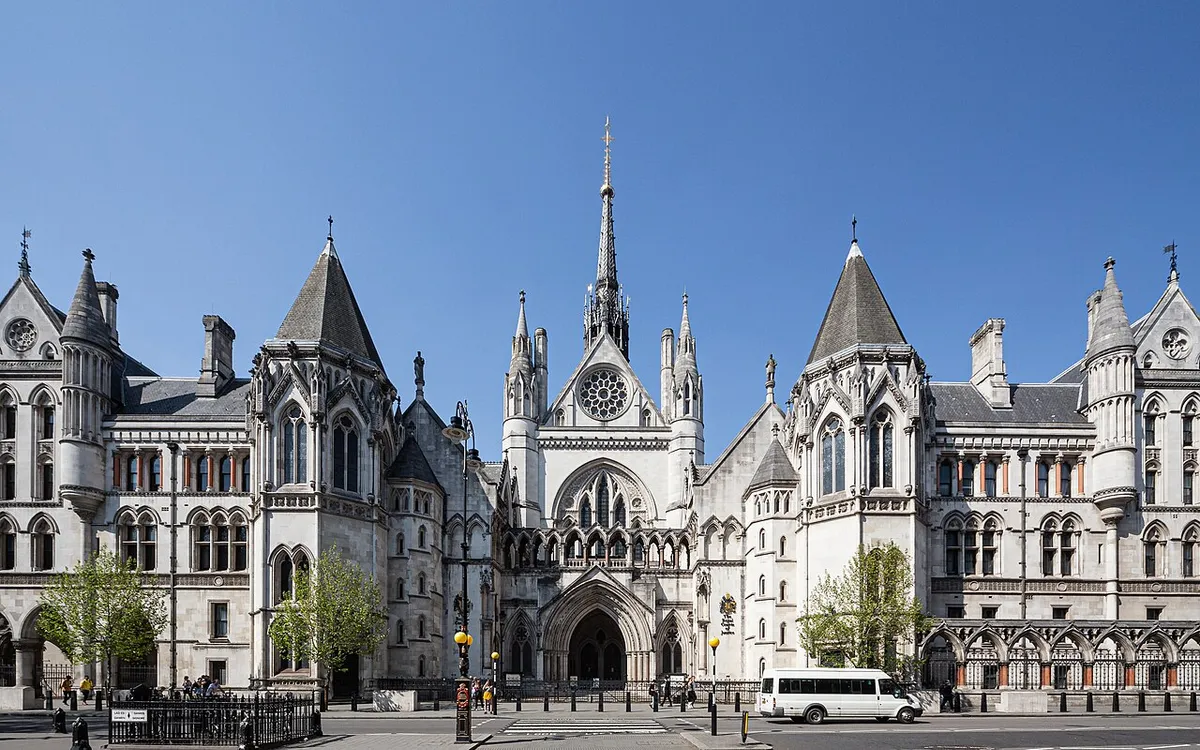
That surplus is what the case is now about. On October 12 a London judge ruled that Chinese law decides the victims' claims, and under Chinese law they could be limited to their original investments and interest, with no share of bitcoin's rise. The next day a court in Tianjin published notice that it had taken up a prosecutors' application to confiscate the same coins. Two states are now lining up behind the victims for whatever is left.
What the numbers say
All figures below come from court records or the outlets that reported them, and they don't line up perfectly. Here is each one with its source.
- The coins. Arkham's labelled wallets put UK government holdings at 61,245 BTC (The Block, October 13). The Tianjin application names 61,896 BTC, plus 72,746 each of bitcoin cash, bitcoin gold and bitcoin SV, and 3.6 million XRP (Decrypt, October 22). The gap is 651 BTC, about $53 million. This piece uses the smaller count.
- The price. Bitcoin closed October 23 at $81,616 on Coinbase. At that price 61,245 BTC is worth just under $5.0 billion, in line with The Block's £3.8 billion.
- What the scheme raised. The London judgment quotes a 2021 Tianjin court finding that victims paid in RMB 40,228,350,969, about £4.1 billion, between 2014 and 2017 (paragraph 16).
- What it paid back. The same finding says about RMB 34.1 billion, about £3.4 billion, went back out to some victims as fake returns (paragraph 17). Raised minus repaid leaves RMB 6.1 billion, about £0.6 billion.
- What investors lost. The Tianjin prosecutors' 2026 application puts losses for more than 102,000 investors at RMB 19.98 billion.
The two loss figures measure different things. RMB 6.1 billion is the scheme's net hole: everything paid in, minus everything paid out. RMB 19.98 billion is closer to what the losers lost, because a Ponzi pays its early investors with later ones' money, and the people who got out ahead don't offset the people who didn't. The second figure is the one a victim would recognize, so it's the one this piece uses for the surplus. The conversions to pounds use the judgment's own rate, RMB 40.2 billion to £4.1 billion.
Why the London ruling shrinks the victims' share
The victims brought their claims under section 281 of the Proceeds of Crime Act, which lets someone ask the court to declare that property recovered by the state is theirs. Their lawyers argued under English law, where a defrauded investor can trace their money into the asset it bought and claim a share of that asset, gains included.
Mr Justice Turner disagreed. The investors were in China, the money was paid in China, and Qian bought the bitcoin before she fled, so Chinese law governs whether they own any of it. Reporting on the ruling says that leaves victims with a claim for principal and interest, and nothing from a coin that has risen many times over since 2014.
That's the hinge. Under English tracing rules, a victim whose money bought 1% of the coins could argue for 1% of £3.8 billion. Under a principal-and-interest claim, they get their money back with interest and the rest of the pile stays where it is. The court still has to decide what the victims can prove under Chinese law, and Fieldfisher, the lead firm for the claimants, says it is pursuing an appeal.
Who the surplus would go to
Two claims are now in play for the residue, and they point in opposite directions.
China's. The Tianjin No. 2 Intermediate People's Court accepted the prosecutors' application on September 28 and published notice on October 13, opening a six-month window for interested parties before a hearing. A Chinese forfeiture order has no force over coins held in London on its own. It would need a UK court to recognise it, or a deal between governments.
The UK's. Coins the court doesn't hand to a claimant stay recovered property of the state. The Home Office's own description of its Asset Recovery Incentivisation Scheme is that it divides recovered assets between operational agencies and the Home Office on a 50/50 basis. Half of £1.8 billion is £900 million. The scheme paid out £129.6 million in total to every agency in the 2025-26 financial year, so this one case could hand the Met, prosecutors and courts about seven times what the whole scheme paid out last year.
That's our arithmetic, and the scheme may not run its normal course on a sum this size. Treasury officials have privately asked whether the coins could help fill a gap in the public finances, and prosecutors have said victims could be paid through a redress scheme run from China. Nothing published so far says how the residue would be split.
What could change the sum
Three things move the £1.8 billion, and only one of them is in a courtroom.
- The price. The coins cover the RMB 19.98 billion loss figure only while bitcoin stays above about $43,700, a fall of 46% from the October 23 close. Above that, every $1,000 move in bitcoin adds or removes about $61 million of surplus.
- Interest. Chinese law lets victims claim interest on top of principal. Nothing published yet says at what rate or from what date, and on loans running back to 2014 it could take a real share of the residue.
- The appeal. If Fieldfisher overturns the choice of law, English tracing rules come back, and the victims could claim the coins' gains instead of their principal. The surplus would shrink toward zero.
What to watch
The appeal decides whether there's a surplus to fight over at all. The Tianjin hearing, due after the six-month notice runs out in April 2027, decides whether China asks London for it formally. And bitcoin's price decides how big it is every day in between.
For anyone tracking government bitcoin as a source of supply, this is the stake. The UK is the third-largest state holder, behind the US and China. Paying victims in yuan means selling coins. Whatever is left after them, whether it goes to Beijing or to Whitehall, is the part that could stay on a balance sheet.
Sources
- Director of Public Prosecutions v Zhimin Qian [2026] EWHC 2509 (KB), judgment of October 12, 2026
- The Block: UK High Court rules Chinese law governs claims over $5 billion in seized bitcoin, October 13, 2026
- Decrypt: Chinese prosecutors seek to confiscate $5.1B in bitcoin seized by UK in Qian case, October 22, 2026
- Bitcoin News Digest, October 23, 2026 (Coinbase BTC-USD close)
- Home Office: Asset recovery statistics, financial years ending 2015 to 2020
- Home Office: Asset Recovery Incentivisation Scheme, financial years ending 2021 to 2026, updated September 15, 2026
This is not financial advice.
More from Crypto

Does the wash sale rule apply to crypto in 2026?
Not yet. A bill the House tax committee passed 38-5 would apply it to crypto sold after September 14, 2026. What that does to a December loss.