

70 million kids have Trump Accounts. 1.3 million got the $1,000.
Treasury opened a Trump Account for every child, but the $1,000 seed has to be claimed. Who qualifies, how to file, and where a 529 beats your own money.
By the numbers
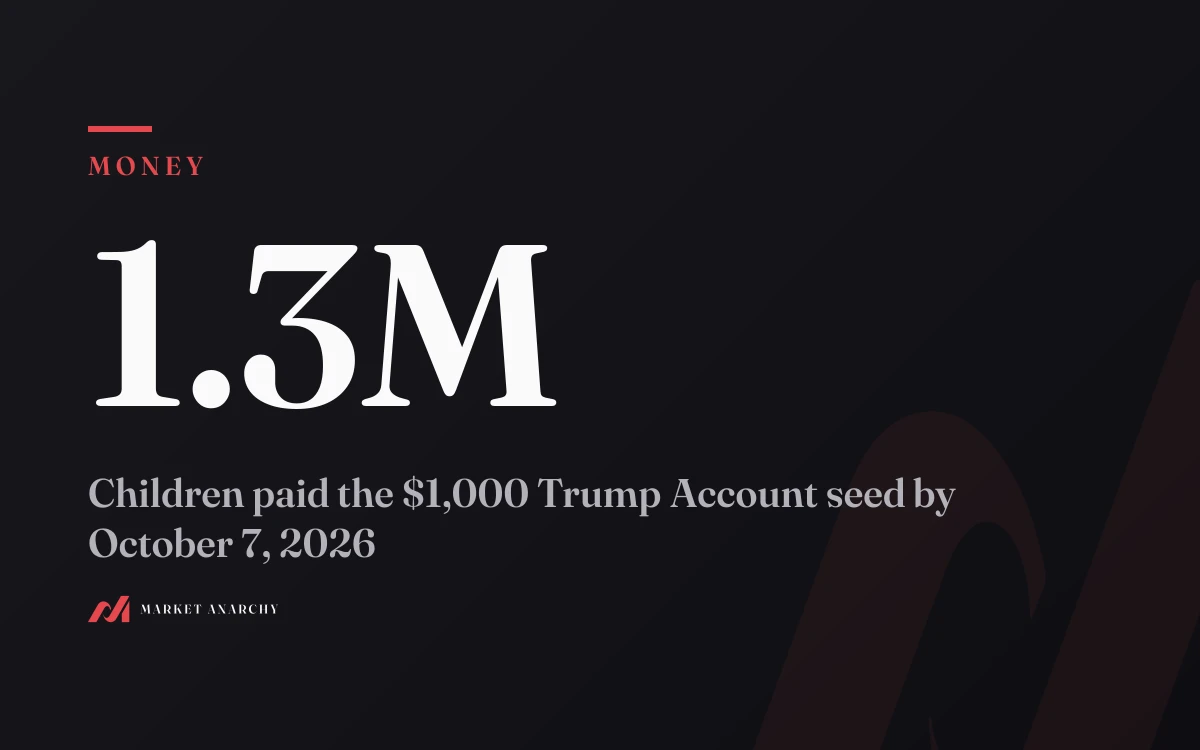
1.3Mchildren paid the $1,000 Trump Account seed by October 7, 2026
70MTrump Accounts open, more than 60 million of them auto-enrolled
3.6MUS births in 2025 alone, every one a possible $1,000 claim
$64average deposited per account, $4.5 billion across 70 million
$5,000yearly cap on family and employer money, after tax for the family's share
Every child in the US with a Social Security number now has a Trump Account. Most of those accounts are empty, and the $1,000 the government promised babies born from 2025 through 2028 doesn't arrive on its own. A parent has to claim it.
By October 7, 2026, Treasury had paid the $1,000 seed to 1.3 million children (Cronkite News, October 9, 2026). The US recorded 3,606,400 births in 2025 alone (CDC), before counting anyone born this year. Some of the gap is claims still in processing, since Treasury pays only once it can confirm the account is open. The rest is unclaimed money.
So the order is simple. Claim the $1,000 if your child was born in 2025 or later. Take any employer or charity money that comes. Then think hard before you add your own savings, because a dollar you put in is taxed worse here than in a 529 if it ends up paying for college.
Who gets the $1,000, and how to claim it
The seed goes to a child who is a US citizen, was born between January 1, 2025 and December 31, 2028, and has a Social Security number issued before the claim (IRS Notice 2025-68). The person claiming it has to expect the child to be their qualifying child for that tax year. Each child gets it once.
Auto-enrollment doesn't trigger the deposit. The IRS says you must elect the $1,000 "even if Treasury automatically opened the account" (IRS). There are two ways in:
- Form 4547, filed with your tax return or on its own.
- The Trump Accounts app or trumpaccounts.gov, where you also claim the auto-opened account before you can manage it.
Neither the IRS page nor the notice sets a deadline for the election. Treasury deposits the money "as soon as practicable" after it confirms the account with the trustee, and the $1,000 can't be offset against a parent's tax debts (IRS Notice 2025-68).
What has gone in so far
The White House counted nearly 70 million accounts on October 7, more than 60 million opened by auto-enrollment that started October 1 (Fortune, October 12, 2026). Deposits since the July 4 launch total $4.5 billion:
- $2.6 billion in philanthropic gifts
- $1.3 billion in $1,000 seeds
- $600 million from family and friends
That averages about $64 an account. Family money is the smallest slice, and most of the philanthropic money is one pledge: Michael and Susan Dell's $6.25 billion, paying $250 to children 10 and under who live in ZIP codes with a median household income below $150,000 (Fortune).
Employer money is mostly still a promise. Treasury said more than 50 companies had committed to contribute at launch (Treasury, July 2026). On October 23 the AICPA, the accountants' trade body, wrote that it is "unlikely that the combination of sufficient guidance, vendor capabilities, and employer organization will exist in time for employers to establish Trump account programs for 2026," and asked that 2026 contributions be allowed into 2027 (Journal of Accountancy, October 23, 2026).
The rules that decide what the account is worth
A Trump Account is a traditional IRA with extra rules until January 1 of the year the child turns 18 (IRS Notice 2025-68):
- Contributions: $5,000 a year from family and employers combined, for 2026 and 2027, then indexed. An employer's share can be up to $2,500, tax-free to the employee. The $1,000 seed and charity gifts don't count against the cap.
- No deduction: a parent's contribution is made with after-tax money.
- Investments: only mutual funds or ETFs tracking a broad index of mostly US companies, such as the S&P 500, with no leverage and fees of 0.1% a year or less.
- No withdrawals before the year the child turns 18.
- After that, traditional IRA rules. Earnings are taxed as ordinary income when they come out, and a 10% additional tax applies before age 59½ unless an exception fits, such as higher education or a first home.
The detail most explainers skip is basis. Your after-tax contributions come back tax-free. The seed, employer money and charity gifts create no basis, so every dollar of those is taxable when withdrawn. Each withdrawal is split pro rata between the two, so a child can't take the tax-free part first.
Where a 529 beats it for your own money
That's our read of the rules above, and it turns on what the money is for.
A 529 college plan also takes after-tax money, but its earnings come out tax-free when spent on qualified education (IRS). In a Trump Account, the same tuition bill waives the 10% penalty and still taxes the earnings as income.
Take $10,000 of earnings withdrawn by an 18-year-old single filer whose income falls in the 12% bracket, which runs from $12,400 to $50,400 of taxable income in 2026 (Rev. Proc. 2025-32):
| Where the $10,000 of earnings sits | Spent on tuition | Spent on anything else |
|---|---|---|
| 529 plan | $0 tax | $1,200 tax + $1,000 penalty |
| Trump Account | $1,200 tax | $1,200 tax + $1,000 penalty |
A student with little other income may owe less, since the earnings stack on top of whatever else they earn that year. On tuition the 529 never does worse, and it does better whenever those earnings would be taxed. And money left in a 529 has a second exit: up to $35,000 over a lifetime can roll into the child's Roth IRA once the plan is 15 years old (Vanguard).
The Trump Account's case for a parent's money is flexibility. It needs no earned income, unlike a Roth IRA, and it can still be a retirement account the child never touches until 59½, when the penalty falls away. If you can't guess whether your child will go to college, that has value. If you're saving for college, the 529 is the better vehicle for your own dollars.
Who this helps, and who it doesn't
Cato's Adam Michel put the split plainly: children of "wealthier families" leave the money in to grow, while lower-income families withdraw early (Cronkite News). A withdrawal at 18 that isn't for school or a home pays the income tax and the 10% on top.
For a family with less to spare, the account's value is the free money: $1,000 from Treasury, $250 from the Dells if the ZIP code qualifies, and whatever an employer adds once the payroll plumbing exists. Programs that pay families to save have the same shape: the Saver's Match also deposits money into a retirement account only for people who take a step to get it.
What to do now
- Check the birth year. Born in 2025 or later and a US citizen: elect the $1,000 through the app, trumpaccounts.gov or Form 4547.
- Claim the auto-opened account in the app so you can see what's in it.
- Ask HR whether your employer is one of the companies planning to contribute, and when.
- Put college money in a 529 first. Use the Trump Account for your own dollars only if you want the long-term retirement option more than the tax break.
Sources
- IRS Notice 2025-68, Trump accounts under section 530A
- IRS, Trump Accounts
- Cronkite News, 1.3M kids have gotten $1,000 in Trump Accounts so far, October 9, 2026
- Fortune, Nearly 70 million kids now have a Trump Account, October 12, 2026
- Journal of Accountancy, AICPA: Trump account regulations make 2026 rollout difficult, October 23, 2026
- Treasury, Official launch of Trump Accounts, July 2026
- CDC NCHS, Births: Provisional Data for 2025
- IRS, 529 plans: Questions and answers
- IRS Rev. Proc. 2025-32, 2026 inflation adjustments
- Vanguard, 529 to Roth IRA rollover
This is not financial advice.
More from Money
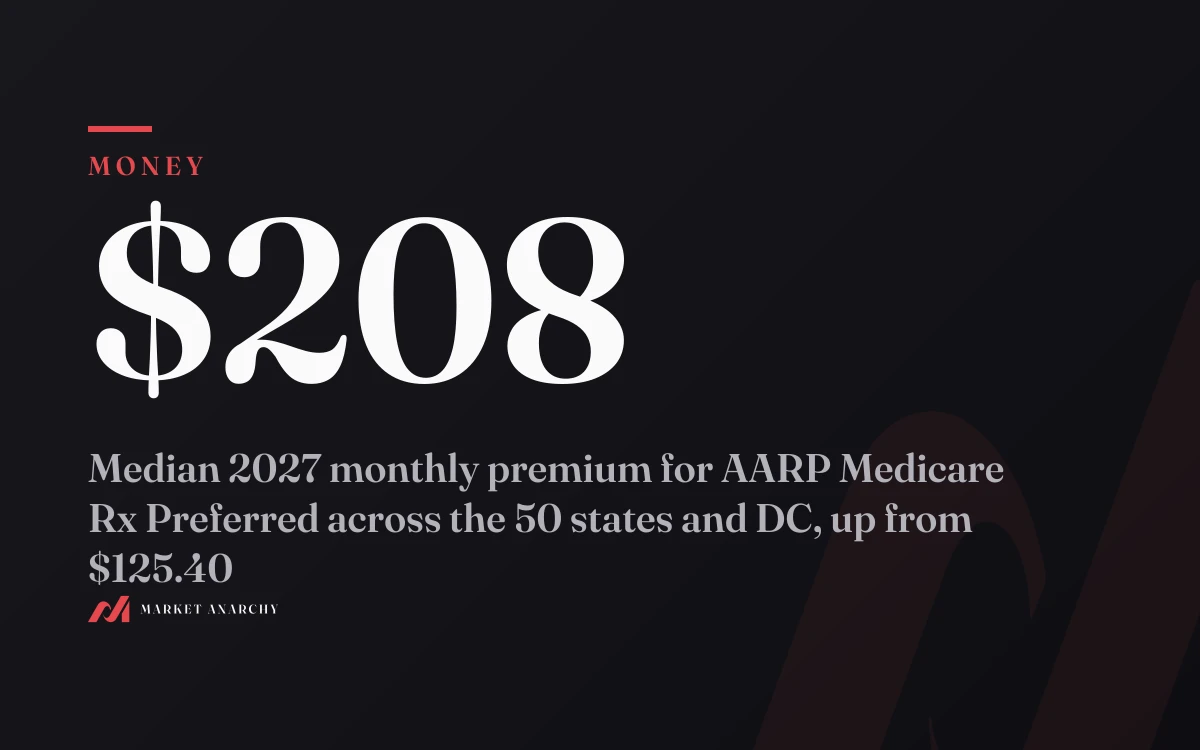
AARP Rx Preferred hits $208 a month. The drug cap is $2,400 a year.
AARP's top Medicare drug plan tops $200 a month in 33 states for 2027, more a year than the $2,400 drug cap. Rivals start at $5.30. Switch by December 7.