

Robot-training video pays $2.40 to $40 an hour. The platform sets it.
Filming chores for robot training pays $2.40 to $40 an hour in 2026. The platform sets the rate, and it pays only for footage a reviewer approves.

By the numbers
$40an hour for chore video at Instawork in Los Angeles, March 2026
$15an hour, the same pay two recorders got at Micro1 in Nigeria and on a US OpenTrain listing
$2.40an hour for an Atlas Capture recorder in the Philippines, October 2026
20Mhours of robot training video projected for 2026, up from 1 million in 2025
Filming yourself doing chores for robot training pays between about $2.40 and $40 an hour in 2026. The platform you sign up with moves that number more than the country you live in. A recorder in Nigeria earned $15 an hour through Micro1, and another in Nigeria earned $2.94 an hour through Atlas Capture. Same country, same kind of footage, five times the pay.
The second thing to know is what the hour means. Every rate in this piece is paid per hour of footage the buyer accepts. Your time spent setting up, re-shooting and losing clips to bad light is unpaid. So the honest figure for a recorder is the headline rate times the share of their time that ends up as approved video, and that share can be a quarter.
What each platform pays for an hour of chore video
The rates below come from job listings and from reporters who spoke to recorders. They are the ones on the public record as of October 2026.
- Instawork, Los Angeles: $80 for two hours of footage, recording chores at home with head and wrist cameras (Los Angeles Times, March 12, 2026).
- OpenTrain, US listing: $14 to $15 per hour of recorded video "submitted in line with project guidelines", plus a $20 bonus after 20 hours (posted August 20, 2026).
- Micro1, Nigeria: $15 an hour for a medical student filming at home (MIT Technology Review, April 1, 2026).
- Human Motion Data Recorder, Philippines: $3 per hour of approved footage (The Globe and Mail, October 9, 2026).
- Atlas Capture, Nigeria and the Philippines: $50 for 17 hours, about $2.94 an hour, and about $2.40 an hour for a recorder in the Philippines (The Globe and Mail).
- Objectways, India: ₹250 an hour, under $3 (Business Today, June 13, 2026). One recorder told NPR she films two to three hours a day for about $120 a month.
$40$15$15$3$2.94$2.4
View as table
| label | Hourly pay for chore video, by platform |
|---|---|
| Instawork, Los Angeles | $40 |
| OpenTrain, US (top of range) | $15 |
| Micro1, Nigeria | $15 |
| Human Motion Data Recorder | $3 |
| Atlas Capture, Nigeria | $2.94 |
| Atlas Capture, Philippines | $2.4 |
DoorDash runs a version for its couriers too. Its Tasks app pays for filming chores such as hand-washing dishes, with pay shown upfront, and it's closed to couriers in California, New York City, Seattle and Colorado. DoorDash hasn't published a rate.
Why the same hour pays $3 on one app and $15 on another
Buyers pay for a specification, and the platforms sell different ones. Instawork's newer rig, Instacore, is five synchronized cameras on the head, chest and both wrists, worn in commercial kitchens, warehouses and hotels. A phone on a headband in a home kitchen is a cheaper product, and it pays like one.
The buyer's side of the price is harder to see. Dexset, a company that sells this data, puts egocentric video at $15 to $40 an hour to the buyer, with $10 to $26 of that going to the person recording. That's a vendor's own cost sheet, so treat it as one company's numbers. Set beside it, a platform paying $2.40 is either selling cheaper footage or keeping a much wider margin. The public record doesn't say which, and the platforms don't publish what they charge.
The rate is per approved hour, and approval is the catch
Read the listings closely. OpenTrain pays per hour "submitted in line with project guidelines". Human Motion Data Recorder pays per hour "of approved footage". A Los Angeles couple filming dinner for Sunain, another data startup, had a clip disqualified because steam from the dish blocked the camera. In the same report, each recorded task had to run between two and 15 minutes, so a session is a string of short clips with setup in between.
How much of your time turns into paid footage? A tutor in Delhi told MIT Technology Review it takes him an hour to make a 15-minute video. Unidata, another vendor, writes that high-volume capture without tight controls produces datasets where 30 to 40% of footage fails quality checks.
Our arithmetic, using those two figures:
- At $15 per approved hour and 15 usable minutes per hour of your time, you earn $3.75 an hour. That's below the $7.25 federal minimum wage and close to what Atlas Capture pays offshore.
- At $15 per approved hour and 45 usable minutes per hour, you earn $11.25.
- At Instawork's $40 and 45 usable minutes, you earn $30.
The gap between those lines is your setup speed and your rejection rate. Nobody publishes either for you, so you have to measure them.
What the offshore rate does to the US rate
Demand is real and growing fast. Instawork cites industry figures of about 100,000 hours of robot training data in 2024, 1 million in 2025 and a projected 20 million in 2026. Objectways, the Indian collector, says it sources recordings from the Philippines, Nigeria and "all over the world".
This is our read: a clip of someone loading a dishwasher in Ohio and one from Chennai teach a robot much the same motion. For generic home chores, footage bought at $3 an hour sets a ceiling on what a lab will pay for the US version once volume is no longer the bottleneck. The US premium holds where the buyer needs something an offshore recorder can't supply: American kitchens and appliances, English speech, or a skilled trade on a multi-camera rig. A Dallas barber now records haircuts for Instawork in a five-camera vest. That's the kind of footage that's hard to source at $3.
What could prove this wrong: if labs find home footage from US kitchens trains noticeably better robots, the US rate stays high on merit. Nothing public shows that yet, in either direction.
Who should take the gig, and how
- You already do the chores and have a recent phone. A listing at $14 or more per approved hour can beat nothing. Track it for a week: minutes you spent, minutes approved, dollars paid. If the result is under the minimum wage, the gig is costing you more than it looks.
- You work a skilled trade. The rig projects in commercial settings are where the higher rates sit, and your job is the footage.
- Don't buy gear first. OpenTrain reimburses the head strap after 20 hours, and Instawork hands out the headbands. A platform that asks you to pay for equipment up front is a different business.
- Read the data terms. The footage shows your home. Recorders told MIT Technology Review they don't know how their data is stored or shared with third parties.
- Set money aside for tax. This is self-employment income in the US, taxed at 15.3% for Social Security and Medicare on top of income tax. Our guide to what freelancers owe the IRS covers the thresholds and dates.
Chore video sits next to text and image work that pays on similar terms; we looked at what AI data labeling pays, and at why the median side hustle earns about $200 a month.
What to watch
Watch US listings over the next two quarters. If OpenTrain-style rates fall from $15 toward the $3 offshore rate as the 20-million-hour target fills, home chore footage has become a commodity. If the rig jobs keep growing while phone jobs shrink, the money has moved to skilled work on camera. Watch the platforms too: Atlas Capture's parent, Mecka AI, is projecting a $300 million revenue run rate by the end of 2026 while paying recorders under $3 an hour.
Sources
- MIT Technology Review: The gig workers who are training humanoid robots at home (April 1, 2026)
- The Globe and Mail: Startups are hiring low-paid gig workers to train robots on manual labour (October 9, 2026)
- Los Angeles Times via Yahoo: Why hundreds of people in L.A. are strapping cameras on their bodies to do chores (March 12, 2026)
- OpenTrain: At-home first-person household task video recorder (August 20, 2026)
- NPR via WWNO: AI companies are paying people in India to film themselves doing chores (October 15, 2026)
- Business Today: ₹250 an hour to train AI (June 13, 2026)
- Instawork: Instawork Robotics Lab debuts Instacore (June 9, 2026)
- TechCrunch: DoorDash launches a Tasks app that pays couriers to submit videos to train AI (March 19, 2026)
- Dexset: Robot training data costs and pricing (July 2, 2026)
- Unidata: Egocentric data collection for robot training (June 18, 2026)
- Hoodline: Dallas barber straps on five cameras to help train robots (October 2026)
- US Department of Labor: Minimum wage
- IRS: Self-employment tax
This is not financial advice.
More from AI money
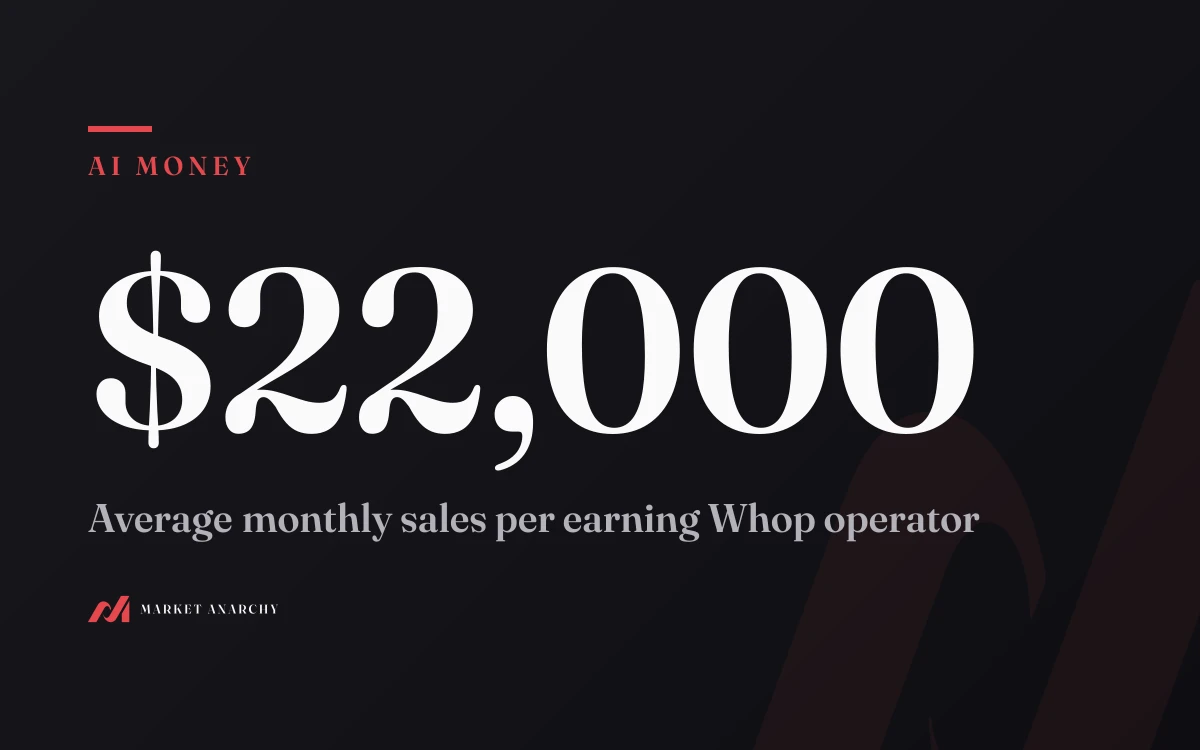
Whop sellers average $22,000 a month. Whop won't give the median.
Whop's 25,000 earning operators average $22,000 a month. Its AI Blueprints built 21,000 more businesses in six weeks and pay a copied seller 60 cents per $100.