Meta's free cash flow went negative. Its buybacks were already zero.
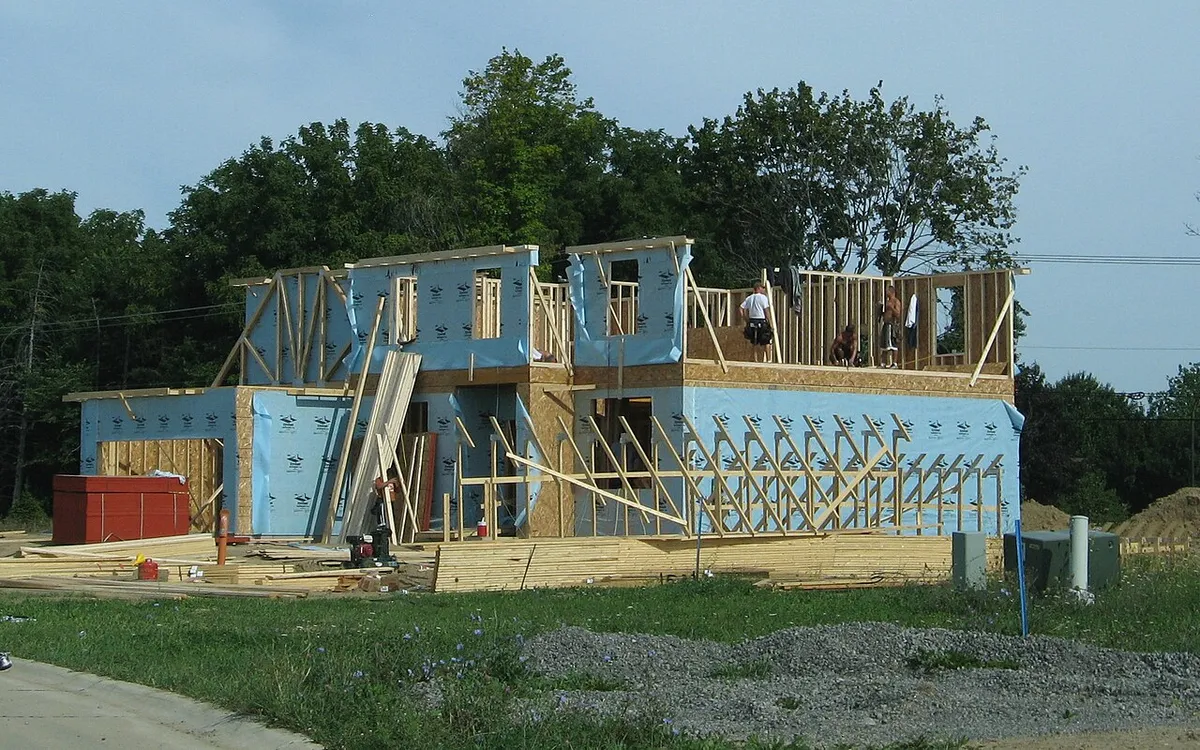
Meta spent $33.9 billion on capex in Q3, more than its operations brought in. Its own guide implies $49 to $59 billion more in Q4, with buybacks at zero.
By the numbers
-$2.12BMeta's Q3 2026 free cash flow, its first negative quarter since 2012
+80%rise in Q3 spending on property and equipment, to $33.94B
$0stock Meta bought back in the first nine months of 2026, against $26.25B a year earlier
$49-59Bfourth-quarter capex implied by Meta's own 2026 guide
$121.41Bnon-cancelable commitments Meta owes in 2027
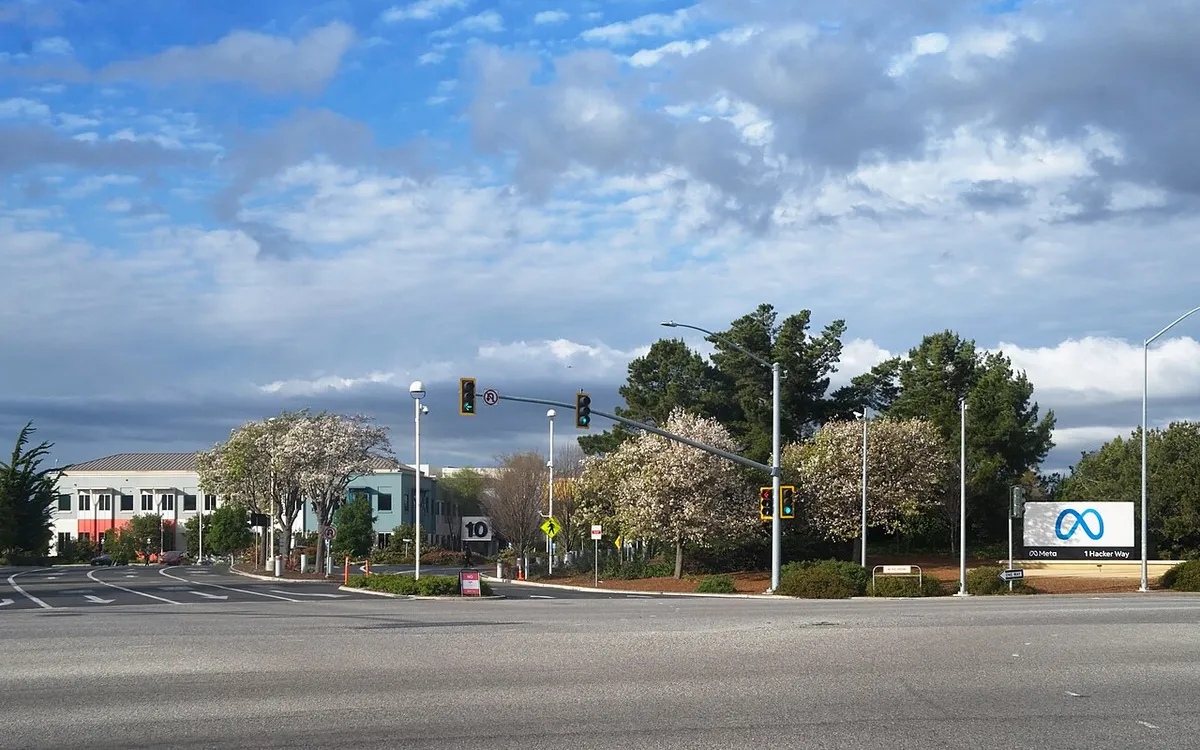
Meta's free cash flow was negative $2.12 billion in the third quarter of 2026. Spending on data centers did it. Operating cash flow rose 9% from a year earlier, to $32.79 billion, while purchases of property and equipment jumped 80%, to $33.94 billion (Meta Q3 2026 release, October 21, 2026). It's the first time since 2012, the year Meta went public, that capex topped operating cash (Opening Bell Daily, October 22, 2026).
The $9.89 billion legal charge in the same report drew much of the early blame. It barely touched the quarter's cash. That money leaves later, on a schedule that starts in January.
And Meta's own guide says the gap widens. The 2026 capex range of $135 billion to $145 billion leaves $49 billion to $59 billion for the fourth quarter alone. Meanwhile Meta has bought back no stock this year, borrowed $25 billion in May, and created a non-voting share class whose first stated purpose is raising capital.
The stock fell 7.0% to $648.85 on October 22. It's down 1.7% in 2026 while the S&P 500 is up 11.9% (Opening Bell Daily).
The legal charge is paid over ten years
Some early reports tied the negative cash flow to the settlement (KuCoin News, October 22, 2026). The $9.89 billion is an expense, booked in general and administrative costs. Cash follows the agreement Meta signed with 52 attorneys general in August, which provides for up to $18.59 billion. Meta pays in ten installments: the first within 30 days of the agreement's effective date, then every January 15 starting in 2027 (settlement agreement, section C).
The balance sheet shows where the charge went. "Other liabilities" rose from $4.25 billion at the end of 2025 to $13.35 billion on September 30, and that line added $7.44 billion to operating cash in the quarter (Meta Q3 2026 release). Our read: most of the charge sits there as an accrual. That flattered the third quarter. The installments still come out of every year that follows.
Nine months of capex, side by side
The year-to-date figures from the cash flow statement (Meta Q3 2026 release):
- Operating cash flow: $96.87 billion, up from $79.59 billion.
- Purchases of property and equipment: $83.06 billion, up from $48.31 billion.
- Free cash flow: $11.05 billion, down from $29.51 billion.
- Share buybacks: zero, down from $26.25 billion.
- New long-term debt: $24.91 billion, up from zero.
Operating cash grew $17.3 billion. Capex grew $34.7 billion, twice as much. Free cash flow fell 63%.
The debt is a single deal. In May, Meta sold $25 billion of senior unsecured notes in six series, maturing from 2031 to 2066 with coupons of 4.55% to 6.45% (Meta 10-Q, Q3 2026). Long-term debt rose from $58.74 billion to $80.92 billion. Cash and marketable securities barely moved, from $81.59 billion to $82.45 billion. The borrowing refilled what capex drained.
$30B$18.8B$32.8B$33.9B$54.2B
View as table
| label | Meta: operating cash vs capex by quarter |
|---|---|
| Q3 2025 operating cash | $30B |
| Q3 2025 capex | $18.8B |
| Q3 2026 operating cash | $32.8B |
| Q3 2026 capex | $33.9B |
| Q4 2026 capex, guide midpoint | $54.2B |
The fourth quarter, by Meta's own guide
What follows is our arithmetic on Meta's numbers. Meta doesn't forecast free cash flow.
Capex including finance-lease principal, the measure the guide uses, was $85.82 billion through September. A full-year range of $135 billion to $145 billion leaves $49.2 billion to $59.2 billion for October through December. The third quarter was $34.91 billion.
Operating cash flow in the fourth quarter of 2025 was $36.21 billion (Meta Q4 2025 release). Grow it 9%, the third quarter's pace, and it lands near $39.6 billion. Fourth-quarter free cash flow then falls between minus $9.6 billion and minus $19.6 billion. For the full year, that's somewhere between plus $1.4 billion and minus $8.6 billion. In 2025, free cash flow was $43.59 billion.
Meta pays about $1.36 billion a quarter in dividends, roughly $5.4 billion a year. Across that whole range, 2026 free cash flow doesn't cover them. A stronger quarter could close part of the gap: Meta guides fourth-quarter revenue to $73 billion to $76 billion, and capex could land at the bottom of its range. Neither changes the sign.
2027 is already committed
The 10-Q lists $454.52 billion of non-cancelable contractual commitments as of September 30, with $121.41 billion due in 2027 (Meta 10-Q). That 2027 slice is larger than Meta's entire 2025 operating cash flow of $115.80 billion (Meta Q4 2025 release).
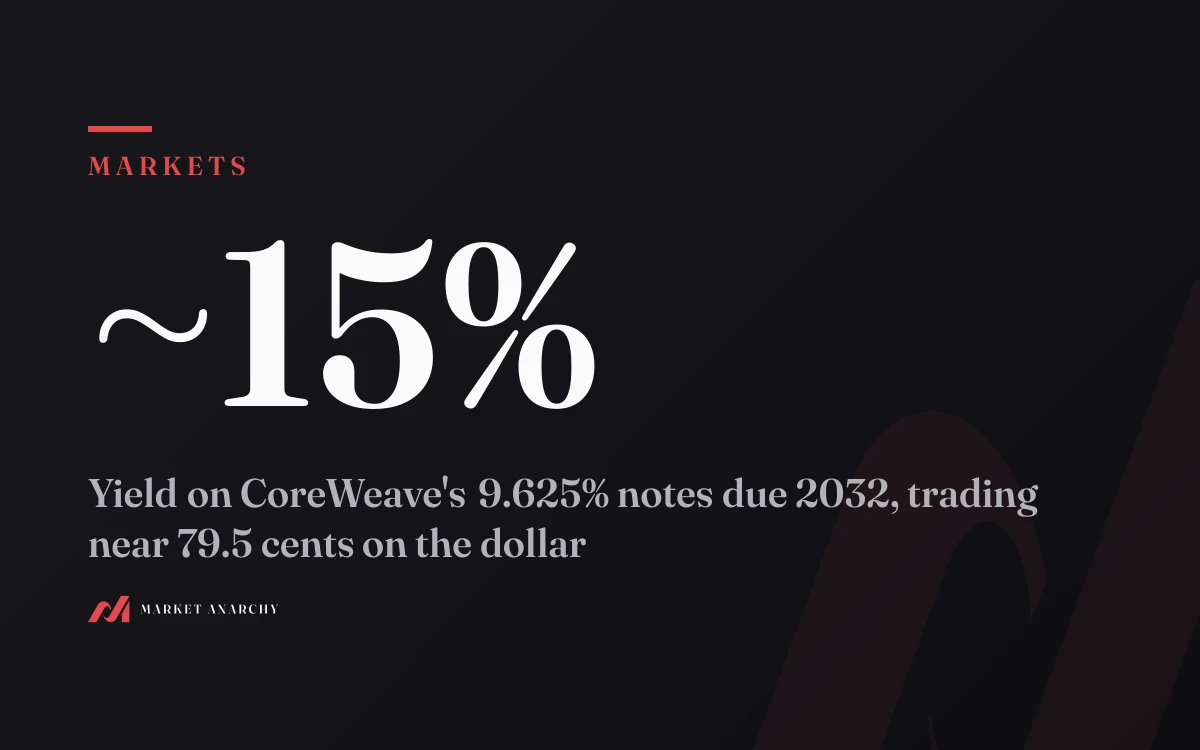
Meta hasn't given a 2027 capex number. Its CFO says the company expects "to continue investing aggressively to support both our core business and emerging AI initiatives" (Meta Q3 2026 release). The same pattern runs through the AI supply chain: Broadcom now lends $42 billion to the customers buying its chips, and CoreWeave's debt yields 15% because its income covers a quarter of its interest. Meta is far stronger than either. It's still moving from paying for AI out of cash to paying for it with financing.
The Class C shares are a funding tool
The same release announced a new publicly listed, non-voting Class C stock, effective January 19, 2027. Every Class A and Class B holder gets one Class C share for each share held, which works like a two-for-one split and leaves voting power where it is. The first reason the board gives is "capital raising, employee compensation, potential acquisitions, and other general corporate purposes", citing "the scale of investment required to compete" (Meta Q3 2026 release).
Our read: non-voting stock lets Meta sell equity, or pay staff with it, without diluting Mark Zuckerberg's control. Meta has announced no share sale. But a company that stopped buybacks, borrowed $25 billion and plans to keep spending has now built the instrument for the one funding route it hadn't used.
The case for Meta
The bull case has numbers too. Revenue grew 26% to $64.60 billion, and the average price per ad rose 14%. Excluding the charge, operating income was $22.88 billion. Headcount fell 15% to 66,775. Meta says its AI spending is "already delivering substantial incremental advertising revenue" (Meta Q3 2026 release). Debt of $80.92 billion sits against $82.45 billion of cash and securities and $272.39 billion of equity. This business still produces $33 billion of operating cash a quarter.
The risk is in the depreciation. It rose to $7.15 billion in the quarter from $4.96 billion a year earlier, and this year's $135 billion-plus of capex will run through the income statement for years. If revenue keeps growing in the 20s, the spending pays for itself. If growth slows, Meta carries the depreciation, the settlement installments and $121 billion of 2027 commitments without the buyback budget that used to absorb a bad year.
What to watch
- January 15, 2027: the first January settlement installment.
- January 19, 2027: the Class C shares take effect. A registration to sell new Class C stock would be the signal that equity is part of the funding.
- The fourth-quarter report: whether capex lands nearer $49 billion or $59 billion, and Meta's first 2027 capex figure.
- Buybacks: a restart would tell you Meta sees the cash gap as temporary.
Sources
- Meta Reports Third Quarter 2026 Results, October 21, 2026
- Meta Platforms Form 10-Q for the quarter ended September 30, 2026
- Meta Reports Fourth Quarter and Full Year 2025 Results
- Settlement agreement, California et al. v. Meta Platforms, 2026
- Opening Bell Daily: Why is Meta stock down today, October 22, 2026
- KuCoin News: Meta Q3 2026 earnings, free cash flow turns negative
This is not financial advice.
More from Markets
T-bills or a savings account in 2026: what cash earns after tax
A 26-week Treasury bill yields 4.35%, Ally's savings 3.1% and the average savings account 0.37%. What each keeps after state tax, and when to pick which.